
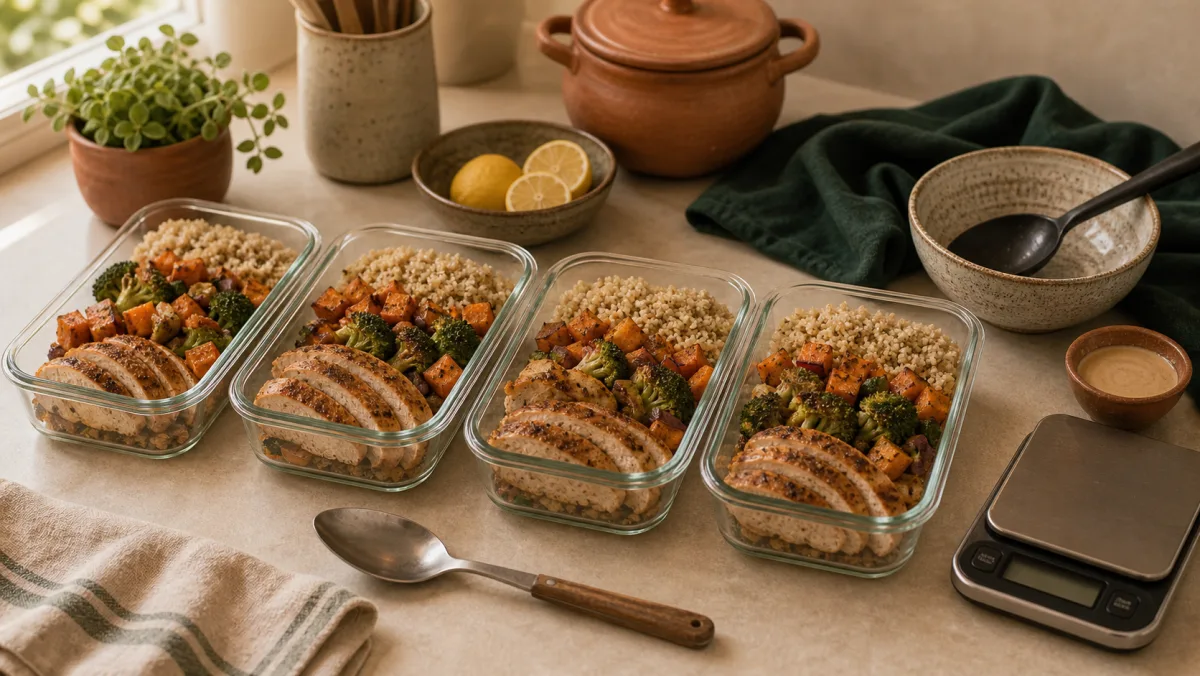
A recipe's serving count is vague; a meal prep container is physical. It has compartments, volume and a target appetite. Decide what one container should hold, multiply by the number of containers, then scale the recipe to produce those amounts instead of trusting a generic 'serves 4' label.
The scaling ratio
Use target containers ÷ original servings only as a first pass. Then adjust by component: protein, starch, vegetables and sauce may not need the same multiplier if your containers have different proportions from the original plate.
Quick reference
A simple container planning grid keeps the math honest.
| Per container target | For 6 containers | For 10 containers |
|---|---|---|
| 4 oz cooked protein | 24 oz | 40 oz |
| ¾ cup cooked starch | 4½ cups | 7½ cups |
| 1 cup vegetables | 6 cups | 10 cups |
| 2 tbsp sauce | ¾ cup | 1¼ cups |
| Extra garnish | Scale loosely | Scale loosely |
The meal-prep scaling workflow
- Choose the number of containers and the portion target for each component.
- Scale the main recipe to the limiting component, usually protein or starch.
- Cook sauces and garnishes separately when they need different ratios.
- Cool, portion and store according to your normal food-safety routine; freeze what you will not eat soon.
Worked example: 4 servings to 10 containers
A chicken rice bowl recipe serves 4 with 1½ lb chicken · 2 cups dry rice · 4 cups vegetables · ½ cup sauce. Straight factor from 4 to 10 is ×2.5.
Scaled: 3¾ lb chicken · 5 cups dry rice · 10 cups vegetables · 1¼ cups sauce. If your containers need more vegetables and less rice, scale those components separately instead of forcing the same factor everywhere.
Meal prep scaling mistakes
- Cooked rice and pasta expand from dry amounts; label whether your target is dry or cooked.
- Sauce that is perfect on day one can disappear into grains by day three. Pack extra separately if needed.
- Crunchy toppings should be portioned separately from wet ingredients.
- One oversized batch takes longer to cool. Smaller shallow containers are easier to manage.
Skip the long division. Paste your ingredient list into the scaling pot and get every line converted at once.
Open the calculator