
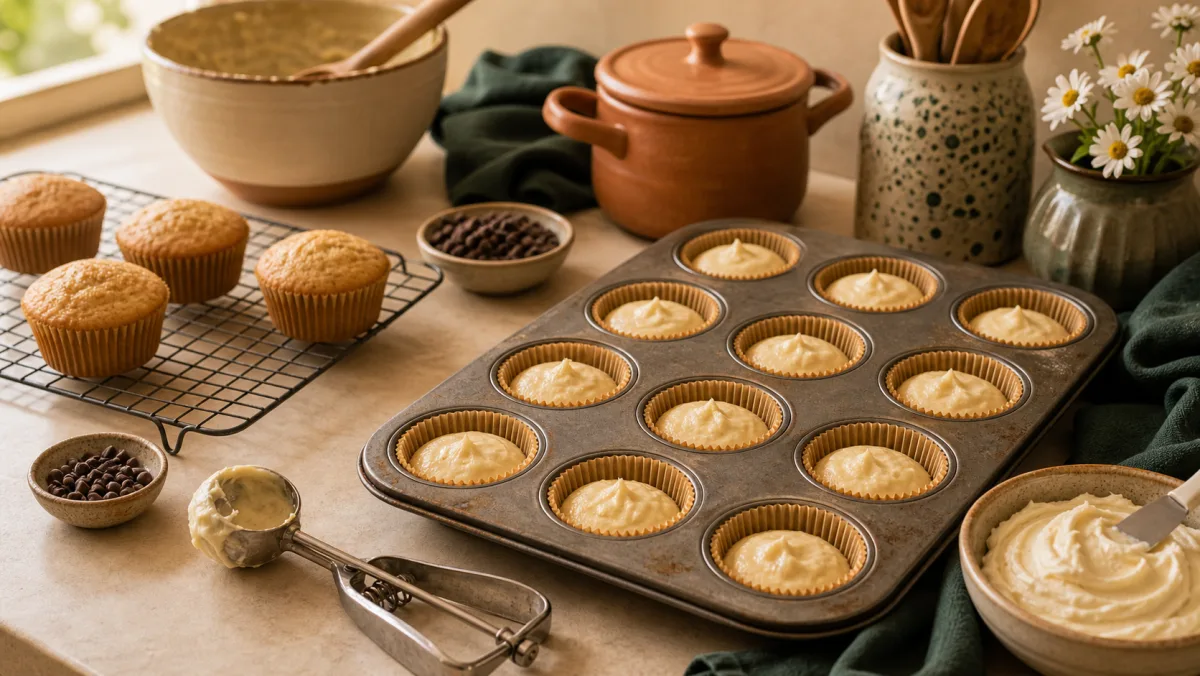
A muffin recipe that makes 12 is a portioning recipe: one batter divided into twelve cavities. Scaling is clean when you keep the same cavity size and fill level. A 24-muffin batch is not one deeper pan; it is two trays that behave like the original.
The scaling ratio
Use target count ÷ original count. From 12 to 6 is ×0.5, from 12 to 18 is ×1.5, from 12 to 24 is ×2, and from 12 to 36 is ×3.
Quick reference
Common muffin and cupcake count conversions:
| Original count | Target count | Factor |
|---|---|---|
| 12 | 6 | ×0.5 |
| 12 | 18 | ×1.5 |
| 12 | 24 | ×2 |
| 12 | 30 | ×2.5 |
| 12 | 36 | ×3 |
The cavity-count workflow
- Choose the target count before mixing so egg fractions and pan count are clear.
- Scale ingredients linearly, preferably by weight for flour and sugar.
- Use the same scoop or fill line in each cavity.
- Bake the same size muffins for the original time range, rotating trays if more than one rack is used.
Worked example: 12 cupcakes to 18
Original: 1½ cups flour · ¾ cup sugar · ½ cup butter · 2 eggs · ½ cup milk · 1½ tsp baking powder.
Factor ×1.5 gives 2¼ cups flour · 1 cup + 2 tbsp sugar · ¾ cup butter · 3 eggs · ¾ cup milk · 2¼ tsp baking powder. Fill 18 liners the same height as the original recipe.
Muffin and cupcake cautions
- Do not overfill to use up extra batter; bake one or two bonus minis instead.
- Mini muffins and jumbo muffins are different recipes for bake-time purposes.
- Two racks of cupcakes can bake unevenly. Rotate top-to-bottom and front-to-back halfway through.
- Frosting usually scales by exposed surface, so 24 cupcakes need about double the frosting, but a very tall swirl can need more.
Skip the long division. Paste your ingredient list into the scaling pot and get every line converted at once.
Open the calculator